
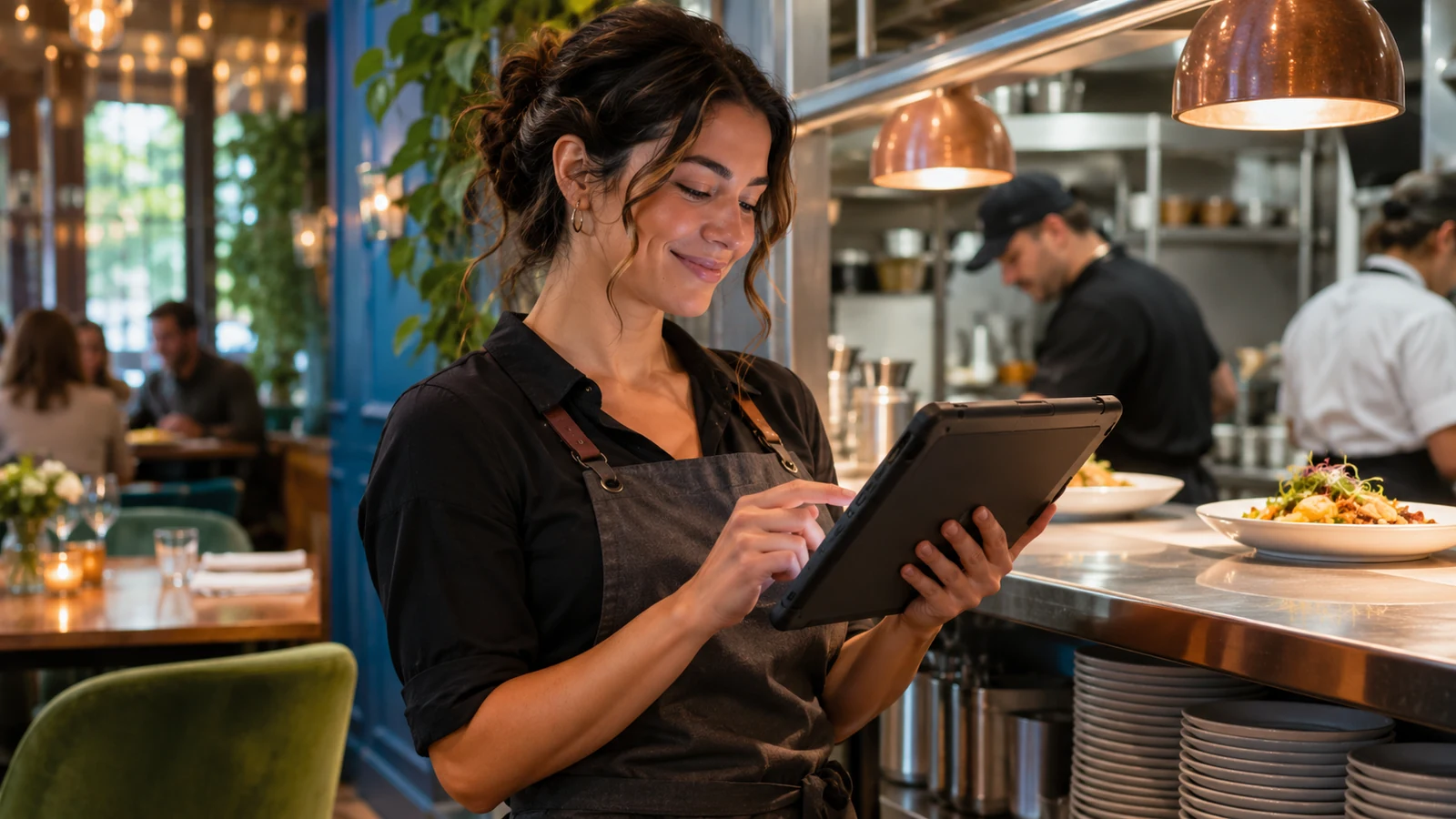
An order disappears from a handheld. A payment takes several attempts. The kitchen says it never received the ticket. Each incident looks like a separate annoyance until you notice how much service depends on the same underlying systems.
In a 2026 FS/TEC interview, Brinker International's Chris Caldwell described listening to restaurant teams and addressing the friction they experienced. Network performance, internet connectivity, handheld devices, kitchen execution, and payments all featured in the discussion.
The lesson for an independent operator is useful even without a national chain's budget: start where technology gets in the team's way.
Listen to the people carrying the devices
Ask a server to show you a frustrating order. Ask the expo where tickets become confusing. Ask the closing manager which system needs the same workaround every night.
You are looking for patterns. Does a handheld slow down on the patio? Does every terminal struggle at once? Does a specific payment device fail after a few hours? The location, timing, and scope of the problem help your support team distinguish an equipment issue from an application or network issue.
Keep a simple incident log for two weeks. Capture the time, affected device or area, task being attempted, guest impact, and what restored service. Use order references when needed without recording sensitive payment information.
Trace the whole order journey
A guest sees a server holding a tablet. Behind that moment are wireless coverage, local network equipment, internet service, application services, menu configuration, and kitchen routing.
Walk an order through the actual restaurant. Include modifiers, a seat change, a special course, a payment, and a receipt. Repeat it in the dining room, bar, and outdoor service areas you use.
Where does the journey fail? Buying another tablet will not repair a coverage gap. Adding bandwidth will not correct a misrouted kitchen item. Diagnosis should connect the symptom to the responsible component.
Treat batteries as service equipment
Caldwell also discussed the frustration of aging handheld batteries. That is an operational detail worth copying into your own checklist.
Label devices, inspect chargers, establish a charging routine, and keep a documented replacement process. Check whether the hardware is still supported by its software provider. Train staff to report degraded batteries before the device dies halfway through dinner.
A spare device helps only if it is charged, signed in correctly, and ready to use. Put that check on the opening list alongside the equipment your team already inspects.
Know what happens when connectivity fails
Different restaurant systems handle internet loss differently. Some functions may continue locally while others require a connection. Confirm the behavior of your specific POS, payments, ordering channels, and integrations with their providers.
Then practice it during an agreed maintenance window. Test how a backup connection activates, which tasks remain available, and how transactions and orders reconcile afterward. Include a recovery check; regaining internet does not automatically prove every queued item completed correctly.
For more background, explore Flyght's internet and Wi-Fi services and network security and failover.
Make accountability part of reliability
When something fails, the manager needs a clear escalation path. Identify who coordinates the investigation, who can contact the application vendor or internet provider, and who confirms that service has recovered.
Measure repeat incidents and recovery time. A restaurant can become accustomed to restarting the same device every weekend without anyone solving the underlying problem.
Caldwell's interview describes foundational improvements as supporting a better guest and employee experience. It does not establish that a network upgrade alone caused Chili's broader business performance, and it is not a Flyght customer case study.
Your own reliability plan can start smaller: find the three failures your team works around most often, identify their causes, and assign owners. Ask Flyght to review that service journey with you.
Source
Restaurant Business / Nation's Restaurant News: Chris Caldwell on Chili's technology foundations, linked from the 2026 FS/TEC Event Insider. This article draws lessons from the interview; no affiliation or endorsement is implied.

