
There's a classic Seinfeld bit where Jerry calls a restaurant to hold a reservation and shows up to find his table is gone. The host explains that they take reservations — they just don't hold them. Jerry can't understand what the point of a reservation is if the table isn't actually kept.
P.S. If you didn't understand a word of that paragraph, watch the video below. It's hilarious, and for restaurant owners — it may be a bit too painfully funny in a sad way.
Seinfeld - The Car Reservation
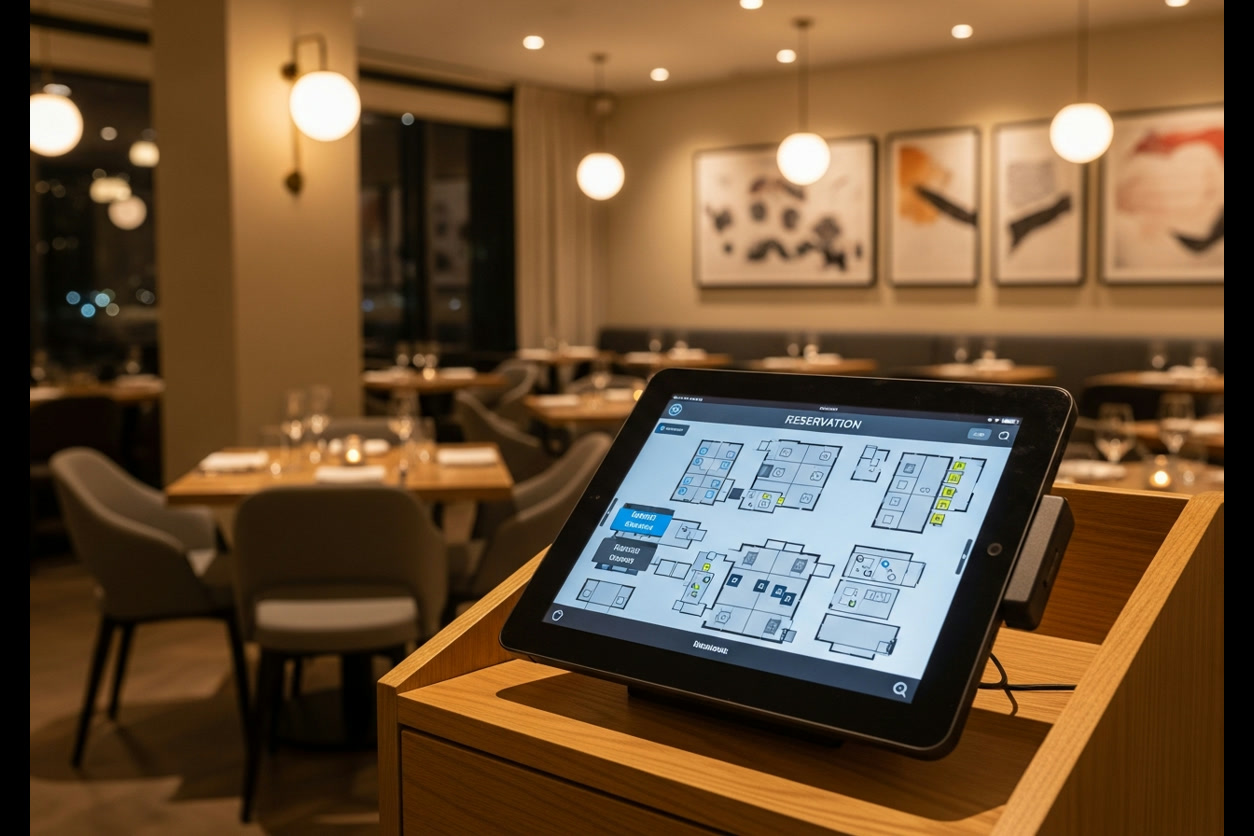
A lot of restaurant setups have the same problem — but with the POS. OpenTable takes the reservation. Your POS has no idea it exists. The guest shows up, someone's scrambling to cross-reference a tablet while a queue builds at the door, and the floor plan in your system looks nothing like the actual floor.
That's what this blog is really about. If you're evaluating OpenTable for restaurants, it's a powerful tool for filling seats — but the value breaks down fast if your POS and reservation system are working in isolation. Here's everything a restaurant owner needs to know: what OpenTable is, how it works, what it costs, how it compares to Resy and Tock, and whether it's actually worth it for your operation.
What is OpenTable?
OpenTable is a reservation management platform. Diners find your restaurant on OpenTable's app or website, pick a date and time, and book a table. You see the reservation in your dashboard, manage your floor plan in real time, and seat guests when they arrive. That's the core of it.
For customers, there's also a rewards system — diners earn points for every reservation they complete, which they can redeem for dining credits. It's a genuine incentive for repeat bookings and helps drive discovery from new guests who are browsing the OpenTable network.
For restaurants, the bigger picture is this: OpenTable gives you access to a global network of diners actively looking for somewhere to eat. That's the draw. The question is whether the cost of that access — and the complexity of connecting it to the rest of your tech stack — is worth it for your specific operation.
How does OpenTable work for restaurants?
Once you set up your OpenTable account, the workflow goes like this:
- Guest books online. They select your restaurant on OpenTable's platform, choose a date, time, and party size, and the reservation is confirmed automatically or pending your approval.
- Your dashboard updates. The reservation appears in your OpenTable floor management view. You can see all upcoming bookings, assign tables, and manage waitlists from a single screen.
- Guest arrives, gets seated. When the guest checks in, you mark them as seated in OpenTable. Guest history — visit count, dining preferences, special occasions — is logged automatically over time.
- Post-visit follow-up. OpenTable sends automated review requests to diners after each visit, helping you build your online reputation without lifting a finger.
That's the smooth version. The version that goes sideways is when step three — guest gets seated — happens in OpenTable but your POS has zero visibility into it. No table status. No pre-arrival profile pull. No automatic cover count. The reservation and the service exist in two separate worlds.
This is where POS integration becomes the whole ballgame.
What does OpenTable actually cost?
Here's the part most articles skip. OpenTable's pricing works on two layers:
- Monthly platform fee: Around $250/month for the core restaurant plan (pricing varies by tier and features).
- Per-cover fee: Roughly $1 per diner booked through the OpenTable network — meaning guests who discover you via the OpenTable app or website. Reservations made directly through your own website's OpenTable widget typically have lower or no per-cover charges.
Do the math on a busy restaurant. If you're driving 400 covers a month through the OpenTable network, that's $400 in cover fees on top of the $250 platform fee. Call it $650/month minimum. For a high-volume spot doing 1,000+ network covers a month, you're looking at $1,250+ monthly just for the reservation layer.
Is that a lot? Depends entirely on what you're getting back. If OpenTable is filling tables that would otherwise sit empty, it's a profitable channel. If you're paying the fee on regulars who would have called or booked directly anyway, the value picture changes.
OpenTable vs. Resy vs. Tock: the real comparison
When comparing OpenTable for restaurants against alternatives, three names come up: OpenTable, Resy, and Tock. They're built for different things. Here's the straight version:
| Platform | Best For | Pricing | POS Integration |
|---|---|---|---|
| OpenTable | Discovery & volume. Largest diner network, strong for restaurants that want new guests. | ~$250/mo + ~$1/cover (network bookings) | Native integrations + third-party via Omnivore |
| Resy | Full-service dining. Popular with chef-driven and hospitality-forward restaurants. | $249+/mo. POS integration costs extra (+$100/mo) | Available, but not included in base plan |
| Tock | High-demand venues. Deposit/prepayment model reduces no-shows significantly. | Subscription-based. Percentage fee on prepaid bookings | Available with select POS systems |
A few things worth knowing before you pick one:
- OpenTable wins on reach. If discovery is the goal — getting in front of diners who have never heard of you — the OpenTable network is the largest in the game. That network effect is real.
- Resy wins on hospitality experience. Resy's tools are built more around the guest experience side — profile management, waitlist handling, communication tools. Strong choice for full-service restaurants where the relationship with the diner matters as much as filling the seat.
- Tock wins on no-shows. The prepayment model means guests have skin in the game. For high-demand venues, tasting menus, or events, Tock effectively eliminates the no-show problem. Less suited to casual or high-turnover operations.
The POS integration — where most restaurants drop the ball
This is the part of the conversation that most "how does OpenTable work" articles completely miss — and it's the most operationally important part.
There's a difference between a POS connection and a true two-way sync. A one-way connection means OpenTable pushes reservation data into your POS. Your POS knows a table is reserved. Full stop. A two-way sync means the data flows both ways — reservation data into your POS, and table status, order data, and cover information back into OpenTable. Guest history updates in real time. Covers are tracked automatically. Your floor plan in OpenTable reflects what's actually happening in your restaurant.
In practice, the difference looks like this:
- One-way: Reservation arrives in your POS. Guest sits down. Your POS handles the order. OpenTable sees none of it. Post-visit, there's no transaction data attached to the guest profile. Next visit, your team has no purchase history to reference.
- Two-way: Reservation arrives in your POS. Guest is seated, order is placed, check is closed. All of that flows back into OpenTable. Guest profile builds over time. Your floor management view reflects live table status. Front-of-house and back-of-house are working from the same picture.
This is exactly where Flyght comes in. Flyght's integration with OpenTable — built on Tabit POS — is a genuine two-way sync. Reservation data flows into the POS. Service data flows back out. Your team sees everything they need, in one place, without toggling between platforms or reconciling discrepancies at end of service.
More to the point: setting up a POS-to-OpenTable integration that actually works correctly is not a plug-and-play afternoon project. It involves configuration, testing, and the kind of back-and-forth with vendors that eats hours you don't have. That's the work Flyght handles for you.
Is OpenTable worth it for your restaurant?
Straight answer: it depends on your operation. Here's the framework:
OpenTable makes sense if:
- You rely on new guest discovery and want access to a large, active diner network.
- You run a full-service operation where reservation management and guest profiles create real value.
- You have the tech infrastructure — specifically, a POS with a proper two-way integration — to get full value out of the platform.
- You can track your cover-to-revenue ratio and confirm that OpenTable network bookings are driving profitable covers, rather than just moving existing regulars to a more expensive booking channel.
OpenTable may be overkill if:
- The majority of your bookings come from regulars who call, walk in, or book through your own channels. You'd be paying the platform fee without meaningfully benefiting from the network.
- Your POS cannot support a true two-way integration. A one-way data push reduces OpenTable to a glorified waitlist — at $250/month plus cover fees, that's a steep price for a calendar.
- You're at a high-demand venue with chronic no-show problems. In that case, Tock's prepayment model likely solves the core problem more directly.
The bottom line
So is OpenTable for restaurants worth it? It's a legitimate, high-value platform for the right operation. The network is real. The tools are solid. The per-cover model is transparent — which, for the record, is more than can be said for a lot of restaurant tech vendors.
But the tool is only as good as its integration. A reservation platform that sits disconnected from your POS is a front-of-house system that has no idea what's happening in the back — and that gap costs you in service quality, in guest data, and in the kind of operational efficiency you're paying for in the first place.
Getting the integration right — specifically a two-way sync between OpenTable and your POS — is the whole job. It's also the part that tends to feel overwhelming when you're already running a restaurant.
That's what Flyght handles. We build and manage the integration, keep both systems talking, and make sure your floor, your POS, and your reservation platform are all working from the same source of truth. You run the restaurant. We'll handle the tech.
Want to see what a real OpenTable integration looks like in practice? Talk to the Flyght team.
Frequently Asked Questions
How does OpenTable work for restaurants?
OpenTable is a reservation management platform. Diners book through the OpenTable app or website, and the reservation shows up in your restaurant's dashboard. You manage floor plans, assign tables, and track guest history from one screen. The platform also sends automated review requests after each visit. What actually matters is whether your POS integrates with OpenTable — without a two-way sync, your reservation system and your service system are operating blind to each other.
How much does OpenTable cost for restaurants?
OpenTable charges a monthly platform fee around $250/month plus a per-cover fee of roughly $1 for each diner booked through the OpenTable network. Direct bookings through your own website widget typically have lower or no per-cover charges. For a restaurant doing 500 network covers a month, expect roughly $750/month total. Whether that's worth it depends on how many of those covers would have come in without OpenTable.
Is OpenTable worth it for my restaurant?
It depends on your operation. OpenTable makes sense if you need new guest discovery and have a POS that supports a true two-way integration. It's less valuable if most of your bookings come from regulars who would have found you anyway, or if your POS can only do a one-way data push — in that case, you're paying premium prices for a basic calendar.
What's the difference between OpenTable, Resy, and Tock?
OpenTable has the largest diner network and is best for discovery and volume. Resy focuses more on the hospitality experience with better guest profile and communication tools. Tock uses a prepayment model that reduces no-shows, making it ideal for high-demand venues and tasting menus. Pricing varies: OpenTable runs ~$250/month plus per-cover fees, Resy starts at $249/month with POS integration costing extra, and Tock charges subscription fees plus a percentage on prepaid bookings.
Why does POS integration matter for OpenTable?
Without a proper POS integration, your reservation system and your point-of-sale operate in separate worlds. A one-way connection means OpenTable pushes reservations to your POS, but your POS sends nothing back — no order data, no table status, no guest spending history. A two-way sync means both systems share data in real time, giving your team a complete picture of every guest from reservation to check close. That's the difference between a tool and a paperweight.

